

Vedh Shala Observatory is a historic astronomical observatory on the bank of the Kshipra River in Ujjain, about 1 km from the city. Built in 1719, it offers a look at how fixed instruments were used to observe the sky, with plaques explaining several of them.
- Setting: on the Kshipra River bank
- Built by Jai Singh in 1719
- Opening hours: 10:00 AM to 05:30 PM
- Notable instruments include the Sun-Dial, Narivalaya, Digansha and Transit instruments
Times checked November 2026.
What is Vedh Shala?
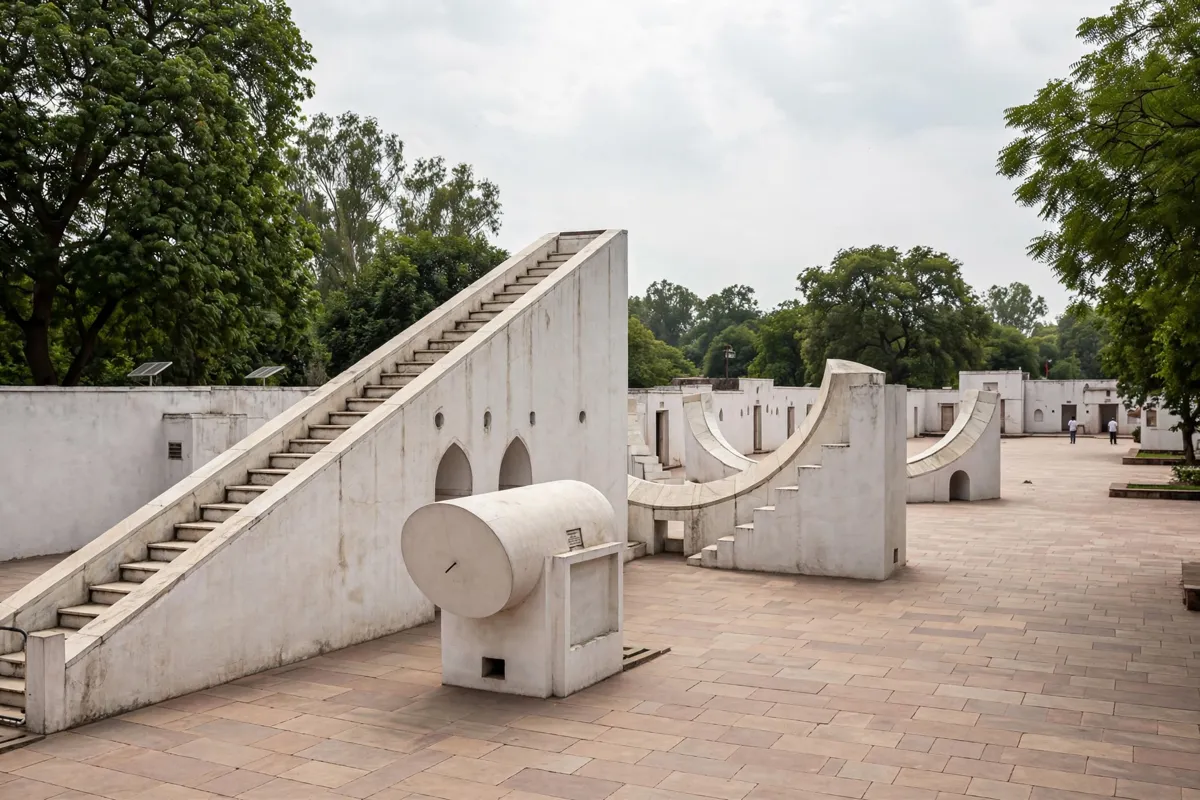
Vedh Shala is Ujjain’s historic astronomical observatory, also known as the Observatory, Jantar Mantar and Yantra Mahal. Maharaja Sawai Raja Jai Singh built it in 1719 as part of a wider network of observatories in Ujjain, Jaipur, Delhi, Mathura and Varanasi.
Jai Singh observed planetary activity himself in Ujjain for eight years and altered several principal instruments. After a period of neglect, Maharaja Madhav Rao Scindia renovated the observatory and funded its active use; it has functioned continuously since then.
Where is the observatory in Ujjain?
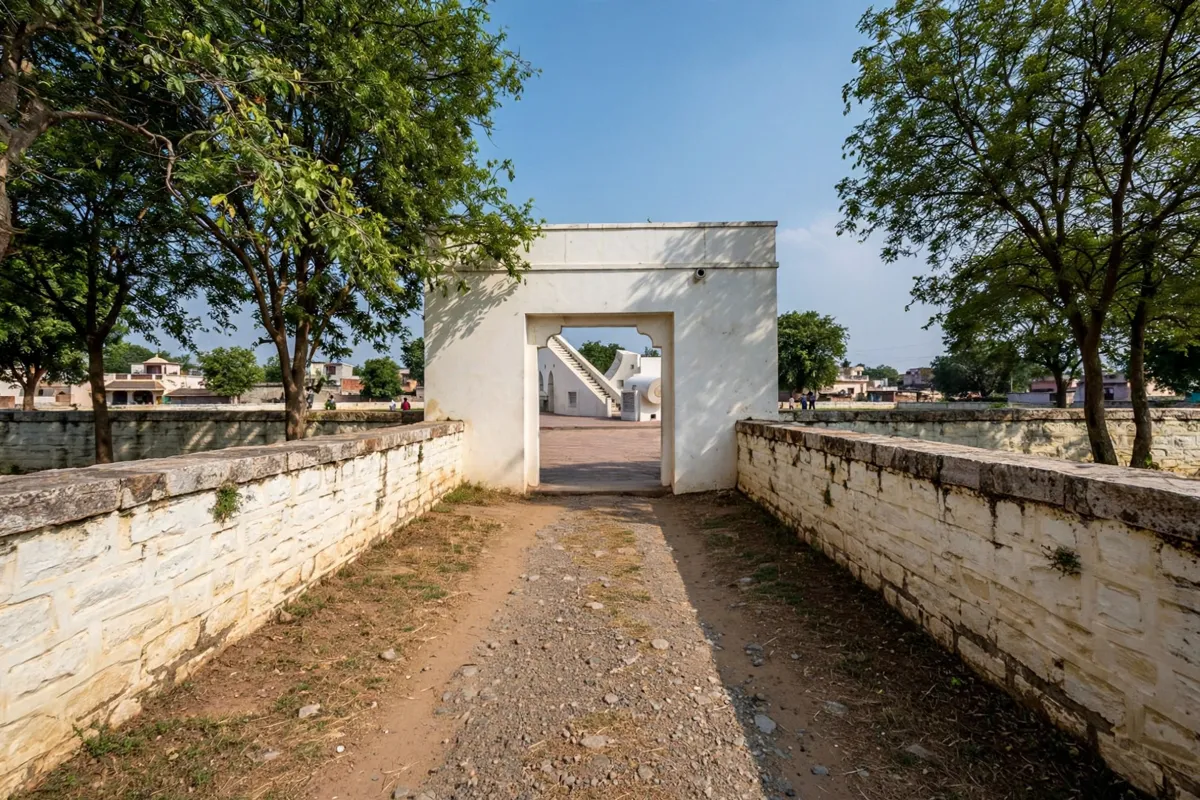
Vedh Shala stands on the bank of the Kshipra River, about 1 km from Ujjain city. The riverbank setting is part of the site, where steps were constructed during a renovation in 2003.
Mahakaleshwar Temple, Ram Ghat and Vikram Kirti Mandir Museum are among the nearby attractions. If you are arranging a city visit, the one-day Ujjain itinerary for temples and the old city brings together several stops.
Which instruments should you look for?
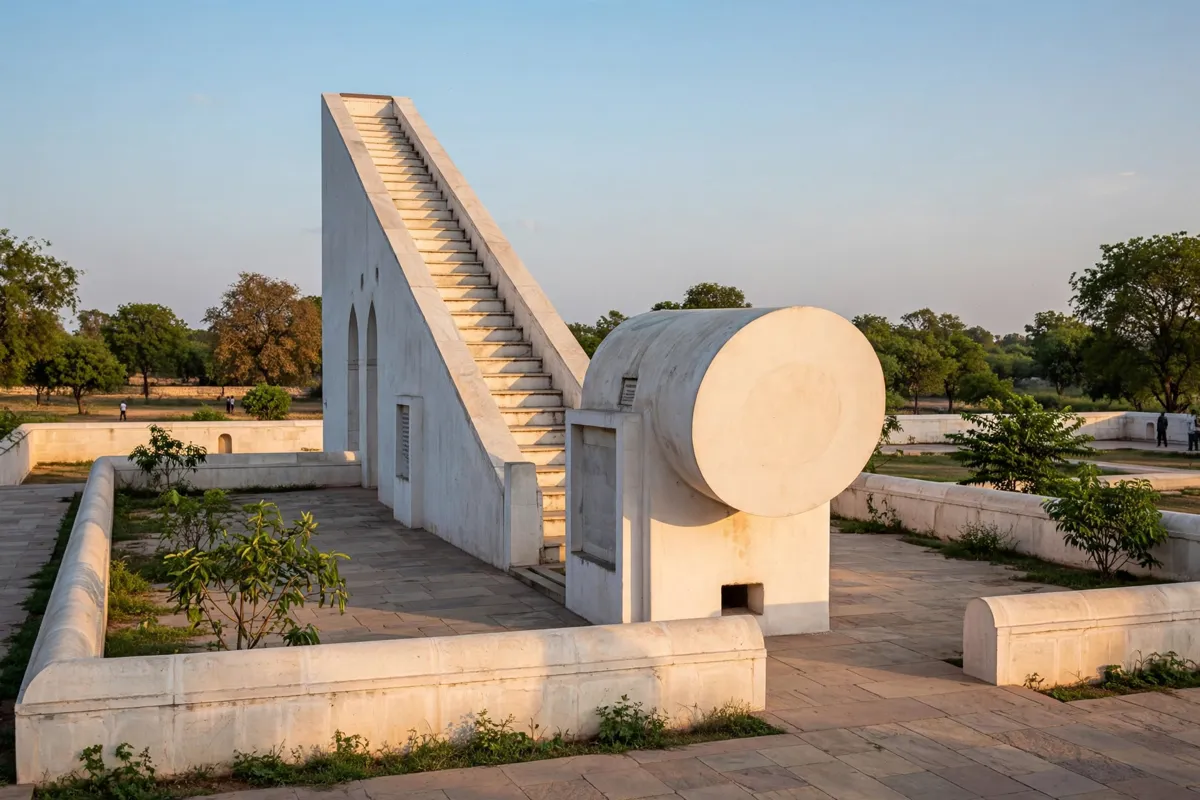
The observatory’s large fixed instruments show how astronomical observations were made on site. Jai Singh’s instruments include the Sun-Dial, Narivalaya, Digansha and Transit instruments; other names used for instruments here include Nadi Valay, Digyansa and Shanku Yantra.
The Shanku (Gnomon) Yantra was prepared under G.S. Apte’s direction. The Digansh Yantra was reconstructed in 1974, and the Shanku Yantra was rebuilt in 1982. Information plaques and notice boards in Hindi and English explain how several instruments work. The site also houses masonry instruments that remain in use for research.
Beyond astronomical observations, the observatory records daily weather conditions, including rainfall, temperature, humidity, cloud conditions, wind speed and direction, and air pressure. Its annual ephemeris, or Panchang, has been published since 1942.
How should you plan a visit?
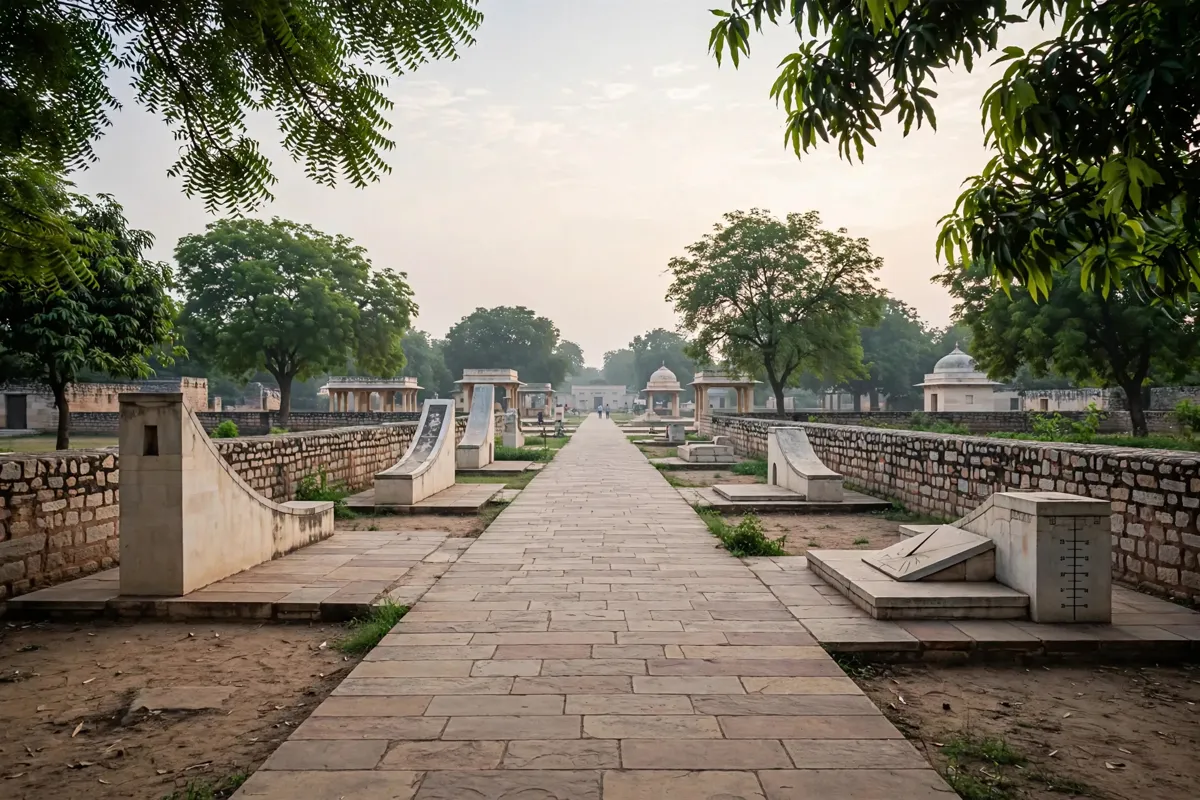
Opening hours are 10:00 AM to 05:30 PM. Hours can change, so check the official site before you go. Plaques around the grounds provide explanations in Hindi and English, giving you context as you move among the instruments.
The grounds were renovated and beautified in 2003, when solar-powered tube lights were installed. An automatic telescope was installed at the site in 2004 to let visitors see planets; this was a one-time installation and is not a guarantee of current telescope access.
How can Vedh Shala fit into a Ujjain day?
Pair the observatory’s riverside setting and astronomical instruments with other nearby city stops, including Ram Ghat. The practical guide to visiting Ram Ghat focuses on the riverside stop, while Vedh Shala adds a distinct history of observation and measurement to a Ujjain day.
FAQs
Is Vedh Shala also called Jantar Mantar?
Yes. Vedh Shala is also known as the Observatory, Jantar Mantar and Yantra Mahal.
Who built Vedh Shala Ujjain?
Maharaja Sawai Raja Jai Singh built the observatory in 1719. He also established observatories in Jaipur, Delhi, Mathura and Varanasi.
What can you see at the observatory?
You can see fixed astronomical instruments, including the Sun-Dial, Narivalaya, Digansha and Transit instruments, alongside explanatory plaques in Hindi and English.
Does the observatory still have research activity?
Yes. The site houses masonry instruments still used for research, and it records local weather conditions daily.